Fascism is cured by reading. Racism is cured by traveling.
— Miguel de Unamuno (1864-1936)


Toronto, Canada
On 21 October 2019, I’m slated to give a talk at the #FITCSpotlight ‘Design Ethics‘ event (making this my 9th appearance at an FITC event in the past 14 years). Here’s an abstract of my presentation…
See What I Mean?
We live in uncertain times on a rapidly warming, fragile, and over-stressed planet. Tumultuous political, social, ecological, and economic instability — along with information overload, an overwhelming pace of change, threatened eco-systems, and staggering social imbalances — threaten our individual sense of purpose, place, and wellbeing. For the majority of our planet’s 7.7 billion human beings, the world remains a place of inequality, injustice, and suffering; even while the privileged of our “developed world” frolic in a buffet of excess, with gluttonous over-consumption as the daily modus operandi.
It’s been said that designers and artists can see and observe differently, more acutely than others — looking deep inside issues, perceiving hidden relationships and causal patterns, possessing an innate consciousness and natural tendency to question and identify needs in “the big picture.” As today’s world has been largely shaped by designers and intentional “form-givers” of the past few generations, are our creative professions even aware of the considerable responsibility that accompanies what we do, and of the complex forces our work exerts on aesthetic, technological, social, environmental, economic, and political fronts?
— Bertrand Russell (paraphrased)
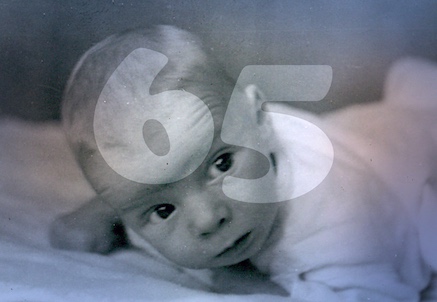
I’ve heard that I now qualify for a free fishing license in the Canadian provinces of Manitoba and Ontario… sashimi days lie ahead.
Cheers!
Rostock, Germany
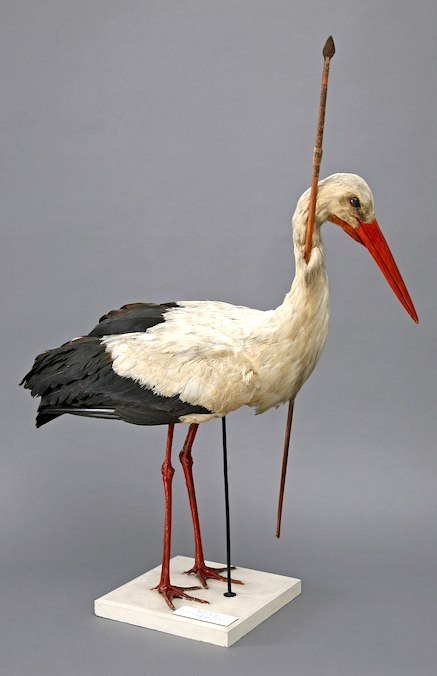
The term Pfeilstorch (German for “arrow stork”) is given to storks injured by an arrow while wintering in Africa, before returning to Europe with the arrow stuck in their bodies. (To date, around 25 Pfeilstörche have been documented).
The first and most famous Pfeilstorch was a white stork found in 1822 near the German village of Klütz, in the state of Mecklenburg-Vorpommern. It was carrying an arrow from central Africa in its neck. The specimen was stuffed and can be seen today in the zoological collection of the University of Rostock… (it is therefore referred to as the Rostocker Pfeilstorch).
This Pfeilstorch was crucial in understanding the migration of European birds. Before migration was understood, people had no other explanation for the sudden annual disappearance of birds like the white stork and barn swallow. Some theories of the time held that they turned into mice, or hibernated at the bottom of the sea during the winter, and such theories were even propagated by zoologists of the time. The Rostocker Pfeilstorch in particular proved that birds migrate long distances to wintering grounds.
(source)
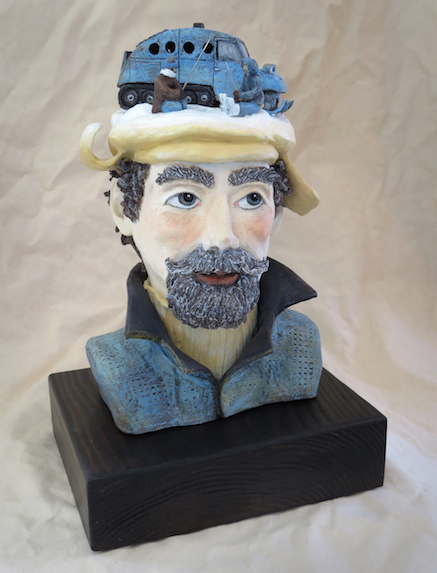
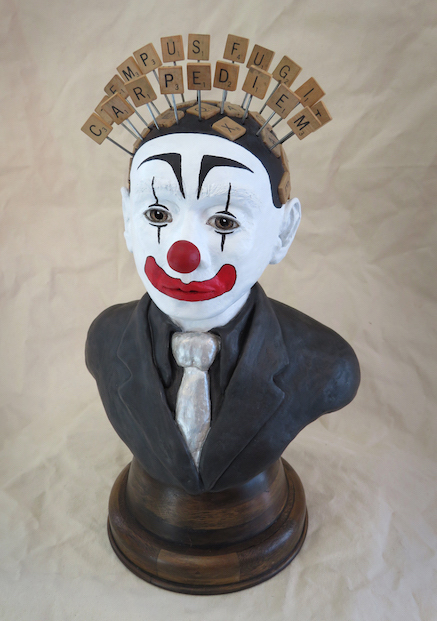
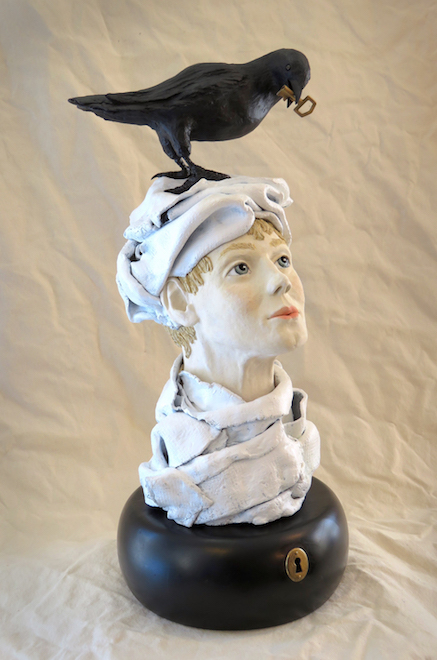
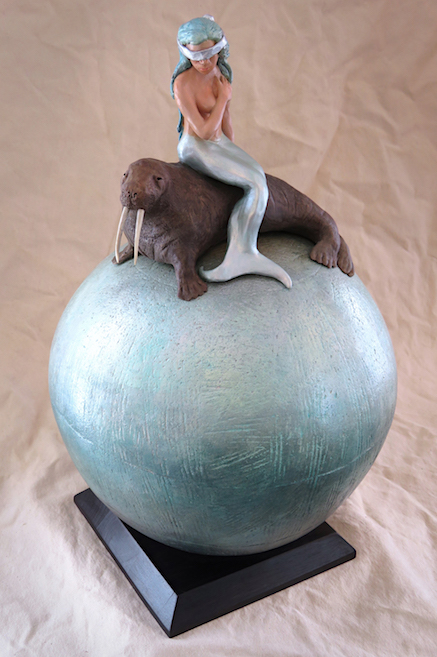
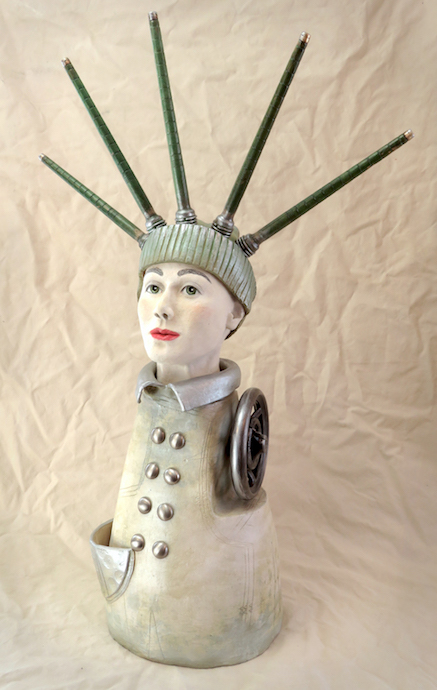
Winnipeg Beach, Manitoba
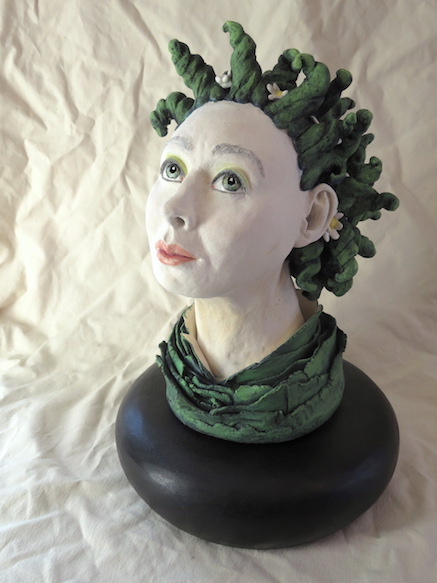
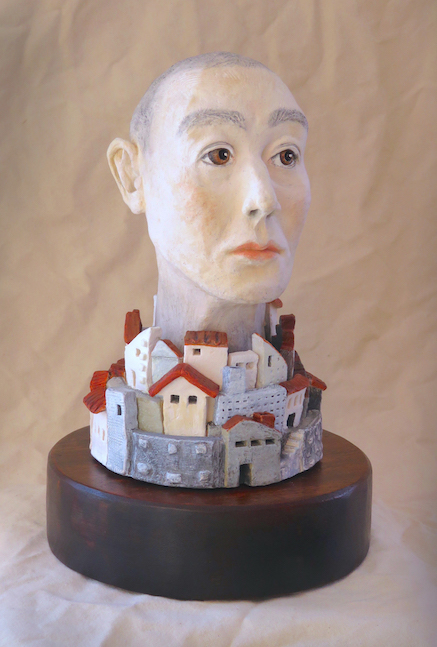
As had been predicted by some weather prognosticators, the past four months have proved to be an exceptionally cold, harsh winter. At Christmas, Ev and I discussed how to make the best of this challenge — and a decision to focus on creating new work in her ceramic/sculpture studio ‘What? Clay Art & Curios’ offered the solution. (The door to the studio is less than 20 meters from the front door of the house, so, no worries about debilitating wind-chills…).
Ev and I collaborate on many of her pieces, with me acting as studio assistant — my background in painting and illustration is put to use (e.g. on cold-finishes) and I particularly enjoy the aspect of multi-media assemblage (combining and joining diverse materials in innovative ways), up-cycling antique and “scrap” elements, and mounting her sculptures to bases, etc. We have a lot of fun together.
Shown above is a sampling of the pieces created in Ev’s studio so far this year (some have sold, some are in galleries) — more complete postings on these pieces (including titles, dimensions, technical descriptions, and “artist’s statements)” can be viewed on her website here.
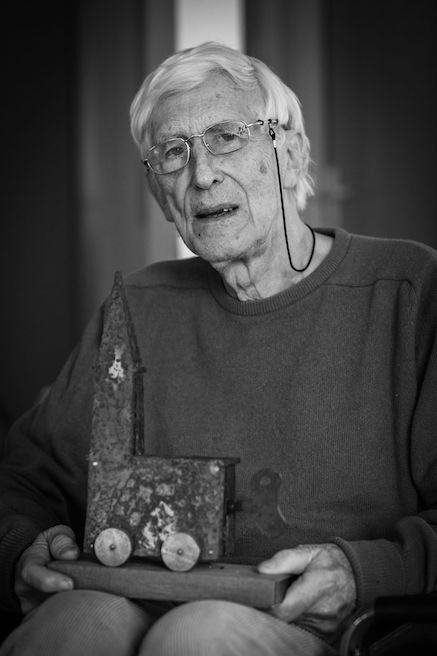
Cork, Ireland
Tomi died peacefully in his sleep with a book beside him. He recently began working on a new collection of short stories and he has two major exhibitions opening in Paris this Spring. Tomi’s imagination never slept. Read more…
A polymath and a provocateur, Tomi Ungerer is perhaps best described by his motto: ‘Expect the Unexpected’.
His life and work defied easy categorization. Although best known as an author and illustrator of children’s books, Tomi Ungerer’s oeuvre encompassed diverse practices including illustration, advertising, writing, collage, sculpture and architectural design. From the beginning of his career in the 1950s to the present day, Ungerer’s work challenged social norms and conventions with breath-taking originality.
Born in Strasbourg in 1931, Ungerer worked in New York, Canada and Ireland as well as his place of birth. He has published over 140 books which have been translated into 28 different languages, ranging from his acclaimed children’s stories to autobiographical accounts to controversial volumes of social satire and adult themes.
Ungerer’s illustrative style is celebrated for its minimal dexterity, darkly comic wit and dazzling inventiveness. Renowned for his iconic advertising campaigns and his contentious political posters that railed against the Vietnam War and racial injustice in the 1960s, Ungerer’s frequently subversive work provides invaluable commentary on the divisive socio-political events of the second half of the twentieth century. Ungerer’s work continues to be politically-charged and he has been involved in numerous humanitarian campaigns for nuclear disarmament, Amnesty International, Reporters without Borders and more recently, European integration.
(from Tomi Ungerer’s official website) Learn more here…
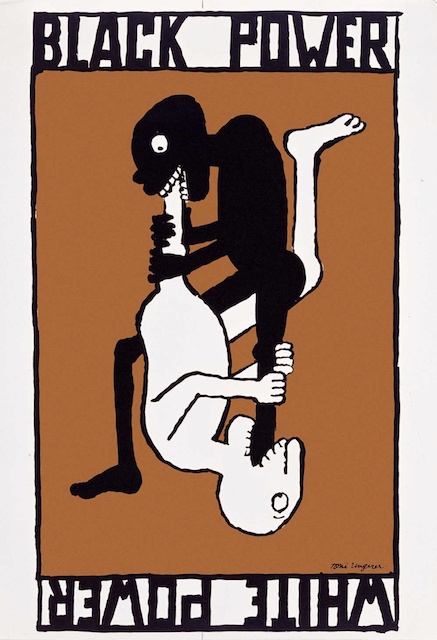
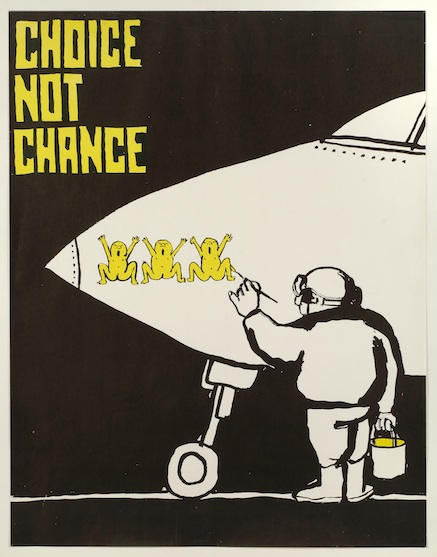
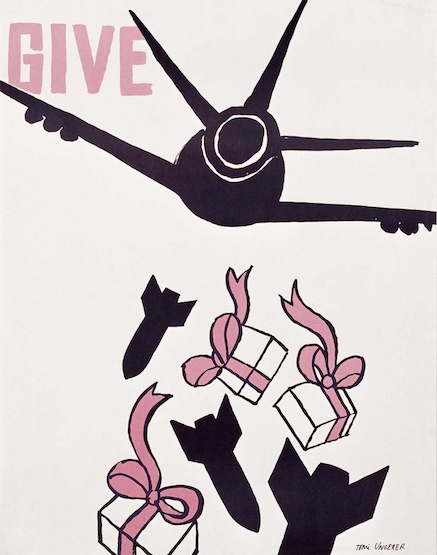
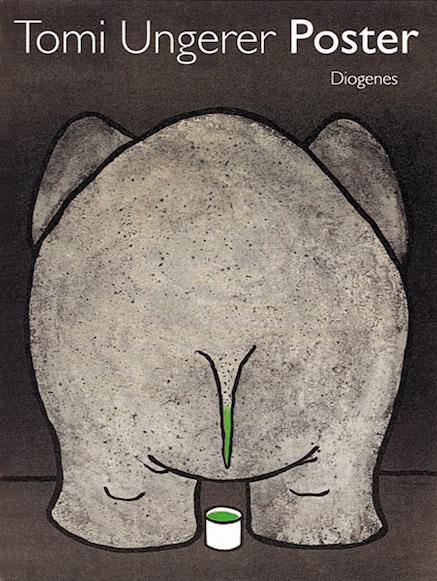
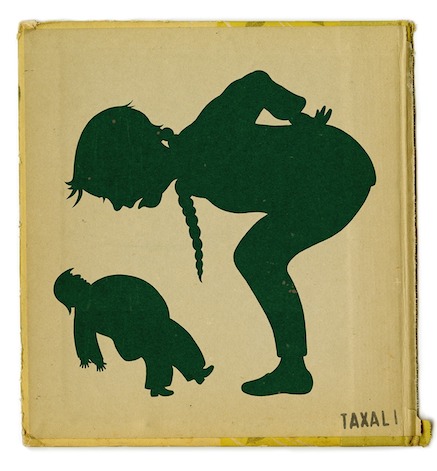
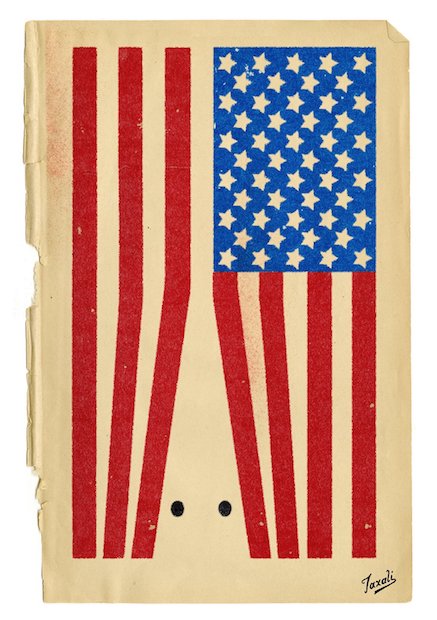
“Posters for me are the most challenging and gratifying exercise. A poster has to act by impact, to catch the eye of a passerby within a few seconds. I would say the poster is more of an art form than most other kinds of advertising.
In the 1960’s I started to make political posters. Two subjects sparked my revulsion and my anger: racial segregation and the War on Vietnam. Later I did posters for other causes such as Amnesty International, liberty of the press, animal rights, ecology, nuclear disarmament and so on.” —Tomi

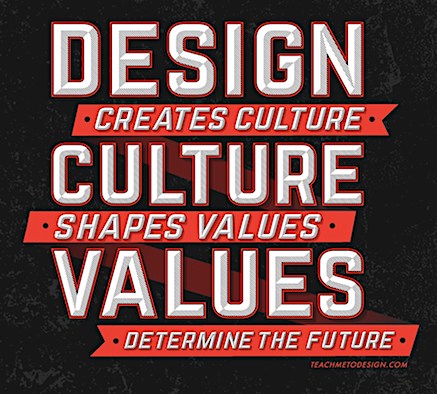
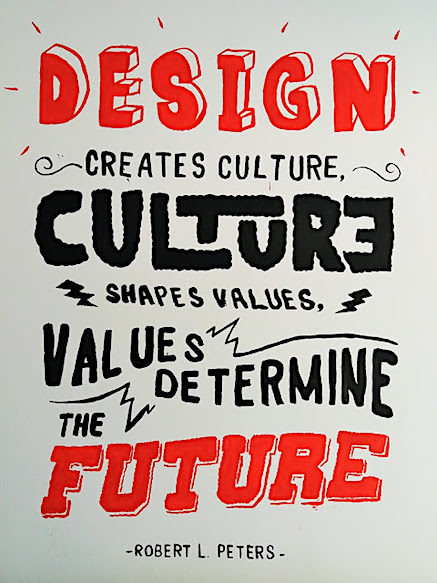


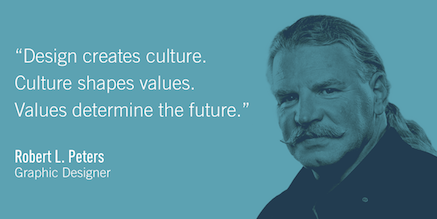
Seemingly everywhere.
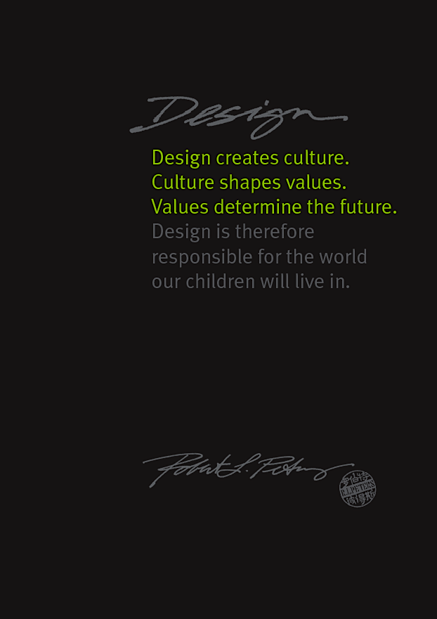
I first used the line “Design creates culture. Culture shapes values. Values determine the future…” in a conference lecture in the mid-or-late 1990s.
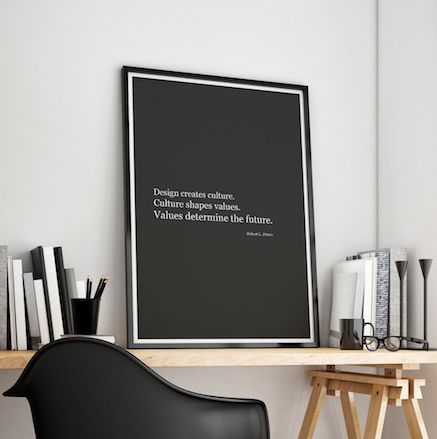
That simple statement has since spread through the Interwebs like some sort of memetic rogue virus, repeated relentlessly by “famous quotes” sites, “wallpaper generators” and the like — a quick Google search brings up literally thousands of graphic “treatments” of this — on sites around the planet devoted to graphic design, yes; but also fashion, interior design, poster and decor sites, product design, architecture, engineering, strategic planning, marketing, medicine, linguistics, social work, advertising campaigns, etcetera, etc…
In fact, hardly a month goes by without someone, somewhere asking me for permission to use this now-famous statement for their own purposes — and of course I grant them full permission. While being widely quoted is certainly flattering, it does carry with it the caution to always “watch what you say.” (-:
For the record, I initially stated the “quotable quote” in question along with the advisory conclusion re: the power of design (and the ensuing responsibility of designers): “Design is therefore responsible for the world our children will live in.”
The top image is my own, from a book on design published in China. The images following are a tiny sample of the many “treatments” found online… (the Mao Clinic even offers it as “downloadable wallpaper” — click image below).